Contact
Contact me
+39 389 19 21 579
info@cuscentzia.com
Follow me
Where
Via Pasquale Tola, 21
09128 Cagliari
Skills
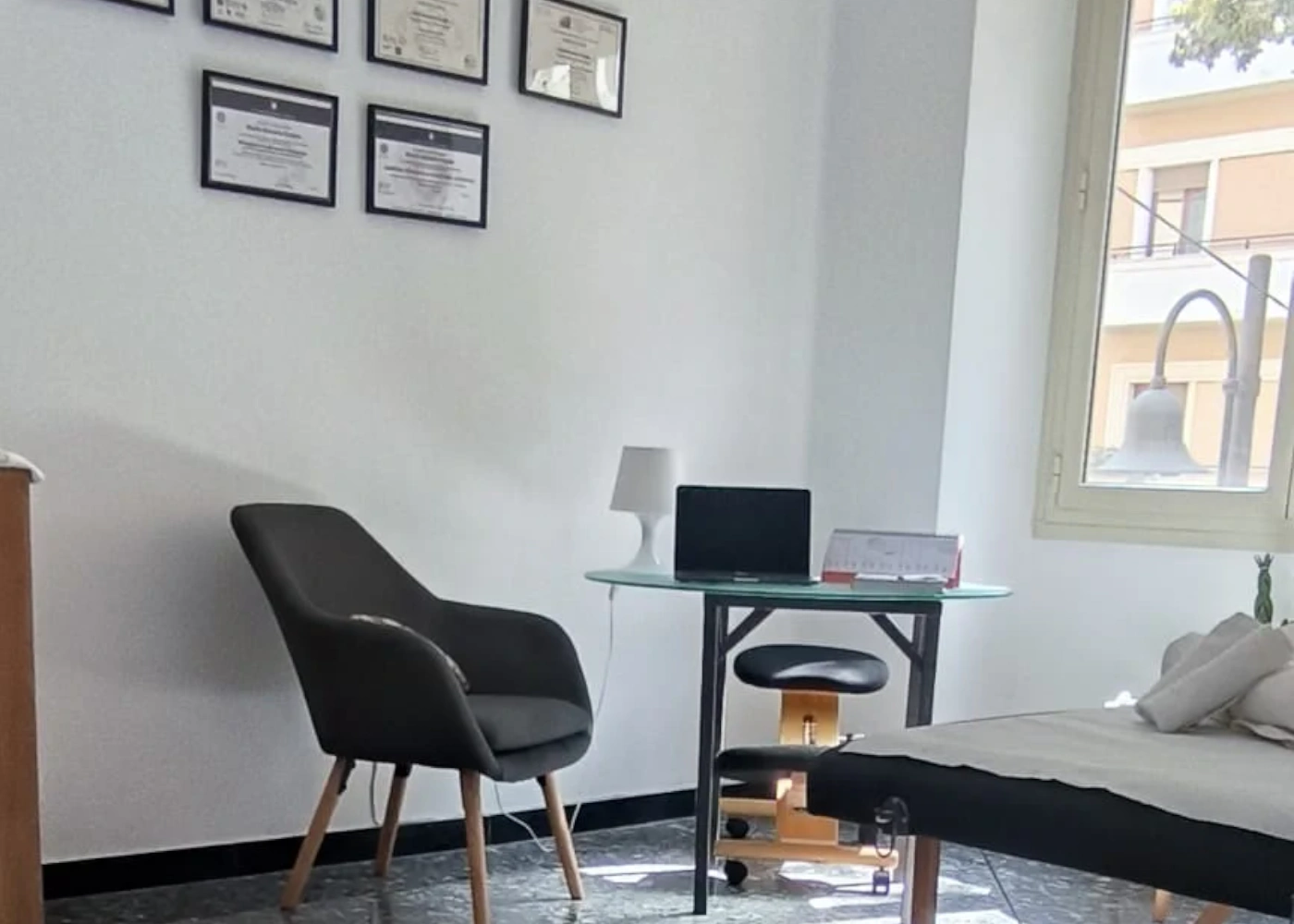
2016–2019 – Escuela Internacional de Yoga, Madrid
Diploma in Yoga Instruction
Diploma in Yoga Teaching
Specialization in Restorative Yoga
Specialization in Ayurveda and Manual Therapies
2021–2023 International Association of Yoga and Ayurveda, Madrid
Specialization in Abhyanga Massage and Complementary Ayurvedic Therapies
Advanced Integral Ayurveda Advisor Diploma
Holder of DALF C2 French
Holder of DELE C2 Spanish
English C1
FAQ
What is the integral approach?
The integral approach aims to integrate and harmonize the various dimensions of human experience: physical, emotional, mental, spiritual, social, and cultural.
Ayurveda, yoga, and meditation consider the human being as a whole, with the goal of restoring balance within oneself and with the surrounding Nature.
By uniting knowledge and practices from different times, cultures, and disciplines, this approach offers a broader and more complete vision of the human being and reality.
It provides you with the keys to understanding your current state of health and consciousness and offers tools to return to harmony and balance with your own Nature and the world around you.
"What is the integral approach to meditation?"
Integral meditation is not limited to a single technique but offers complementary practices that work on different levels: relaxation and breath awareness, observation of thoughts and detachment from mental activity, chakra meditations, meditations on light, inner sound, presence in the body and emotions, and the recognition of one’s true nature beyond thought.
It may include contemplative practices, visualizations, mantra repetition, dynamic or silent meditations, depending on the person and the moment.
What are the fundamental principles of Ayurveda?
The fundamental principles of Ayurveda are the 5 elements (mahabhuta). (Ether, air, fire, water, earth) make up everything in the universe, including the human being; and the 3 doshas are the vital energies that arise from the combination of the 5 elements:
Vata (ether + air): govern movement, communication, and the nervous system.
Pitta (fire + water): control digestion, metabolism, and intelligence.
Kapha (water + earth): provide structure, stability, lubrication, and cohesion.
Each of us has a unique combination of these doshas, called prakriti (our natural constitution). When one or more doshas become imbalanced, illness can develop. L’Ayurveda si occupa di: alimentazione personalizzata, trattamenti con oli, erbe, massaggi (come l’Abhyanga, routine quotidiane e stagionali (dinacharya e ritucharya, pratiche di disintossicazione come il Panchakarma e infine lo Yoga, meditazione e stile di vita consapevole
What is Abhyanga Massage?
Abhyangam is considered one of the most important and ancient treatments in Ayurveda, being one of the fundamental pillars for maintaining health, balance, and longevity.
Literally, “Abhyanga” means “oil massage” and is a practice that involves the application of warm medicated oils all over the body, using precise techniques and harmonious movements.
Abhyanga is divided into several specific types, each with a particular focus and dedicated techniques — for example, Pada Abhyanga, which focuses on the feet and legs, or Mukka Abhyanga, a massage specifically for the head and face.
Abhyanga is a deep treatment whose benefits are almost endless: it nourishes the skin and tissues with warm medicated oils; stimulates blood and lymphatic circulation, facilitating the elimination of toxins; balances the doshas, improving the body’s energetic harmony; helps prevent and reduce stress, anxiety, and muscle tension; promotes deep and restorative sleep;
strengthens the immune system and improves longevity.
How are aromatherapy and crystal healing applied in Ayurveda?
In Ayurveda, each person has a unique constitution called dosha (Vata, Pitta, Kapha), and the targeted use of essential oils in aromatherapy helps restore harmony among these doshas. Essential oils are used in various ways: through environmental diffusion, topical application in massages, or aromatic baths, each chosen based on the specific properties of the oils and individual needs. For example, calming oils like lavender and sandalwood can balance excess Vata, cooling oils such as peppermint or jasmine help rebalance Pitta, and stimulating oils like rosemary and lemon are useful for Kapha. These oils act not only on the physical level, relieving stress, inflammation, or digestive imbalances, but also influence mood and mental state, promoting relaxation or vitality depending on the dosha to be balanced.
Similarly, crystal therapy is based on the vibrational energy of crystals, which are used to harmonize the chakras and rebalance the energy flows according to Ayurvedic principles.
Each crystal has a specific frequency and healing properties that can support the recovery of energetic imbalances related to the different doshas. For example, amethyst is often used to calm the mind and balance Vata, while rose quartz promotes heart opening and emotional balance, particularly beneficial for Pitta. Crystals are applied directly on the body, placed in environments, or worn as jewelry to maintain a constant energetic effect. Often, crystal therapy is combined with Ayurvedic massages or guided meditations, amplifying the rebalancing power and promoting a deep release of physical and emotional tension.
The integration of aromatherapy and crystal therapy within Ayurvedic practice thus offers a personalized and natural path, acting on multiple levels: physical, energetic, mental, and spiritual.
This combination supports health and well-being harmoniously, respecting each individual’s unique nature and fostering a deep connection with oneself and nature.
How can I integrate the pathways into my business or for my guests?
Through Ayurvedic treatments, seasonal rituals, yoga and meditation practices, I guide groups and individuals on journeys of deep well-being, adaptable to various contexts: from corporate wellness to team building, from public events like fairs and festivals to thematic meetings and immersive retreats in nature, for those seeking a rejuvenating and transformative experience.
I collaborate with tour operators and accommodation facilities to offer personalized experiences to organized groups on experiential journeys, as well as to individual guests who wish to enjoy an individual treatment, a rebalancing ritual, or a moment of deep relaxation.
The offer also extends to cultural, sports, and social promotion associations, which can integrate Ayurvedic pathways into their annual programs, thematic events, workshops, and experiential days. Also, to holistic centers, yoga schools, and personal growth groups, with whom I can collaborate to enrich the educational offer and create programs and synergies between different disciplines, respecting specificities and shared visions.
Every experience is born from careful listening to the needs of the group or individual and is tailor-made with sensitivity, competence, and attention to detail.
My approach is flexible, integrated, and humane because I believe in well-being that is not imposed but gently revealed, and that can generate deep and lasting value — in every context.
Because taking care of oneself, others, and one’s guests is an act of awareness, beauty, and transformation.
Discover the catalog
Free consultation
Book your free consultation – it will help us build together the path best suited for you or your group.